
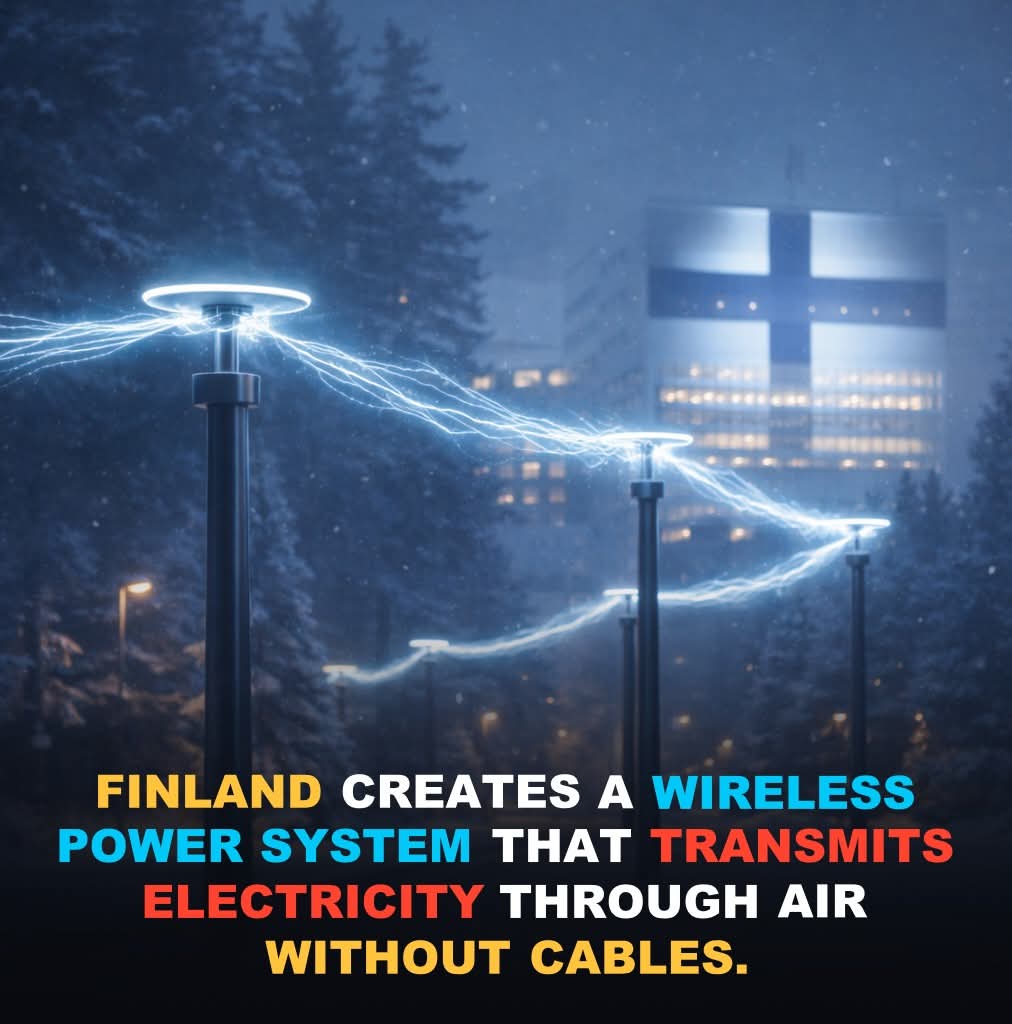
Finland has introduced a new wireless electricity system that transmits power through the air using magneto-inductive technology. Instead of plugs or charging cables, energy is transferred via oscillating magnetic fields, allowing compatible devices to operate or recharge without direct physical connections.
The potential applications are wide-ranging. In smart cities, sensors and infrastructure could be powered continuously without exposed wiring. Drones and autonomous robots could recharge mid-operation, and electric vehicles might one day draw power dynamically without stopping at charging stations. The system also reduces wear, sparks, and corrosion associated with physical connectors.
At the same time, the innovation raises new questions. Regulators and engineers must address safety standards, electromagnetic exposure limits, interference with existing systems, and how wireless energy should be licensed and monitored. Ensuring efficiency while preventing unintended power transfer will be key to large-scale deployment.
If these challenges are resolved, wireless electricity could reshape how energy is delivered—moving it from fixed points and cables into the surrounding environment itself.
About the Author