
It’s finally happening.
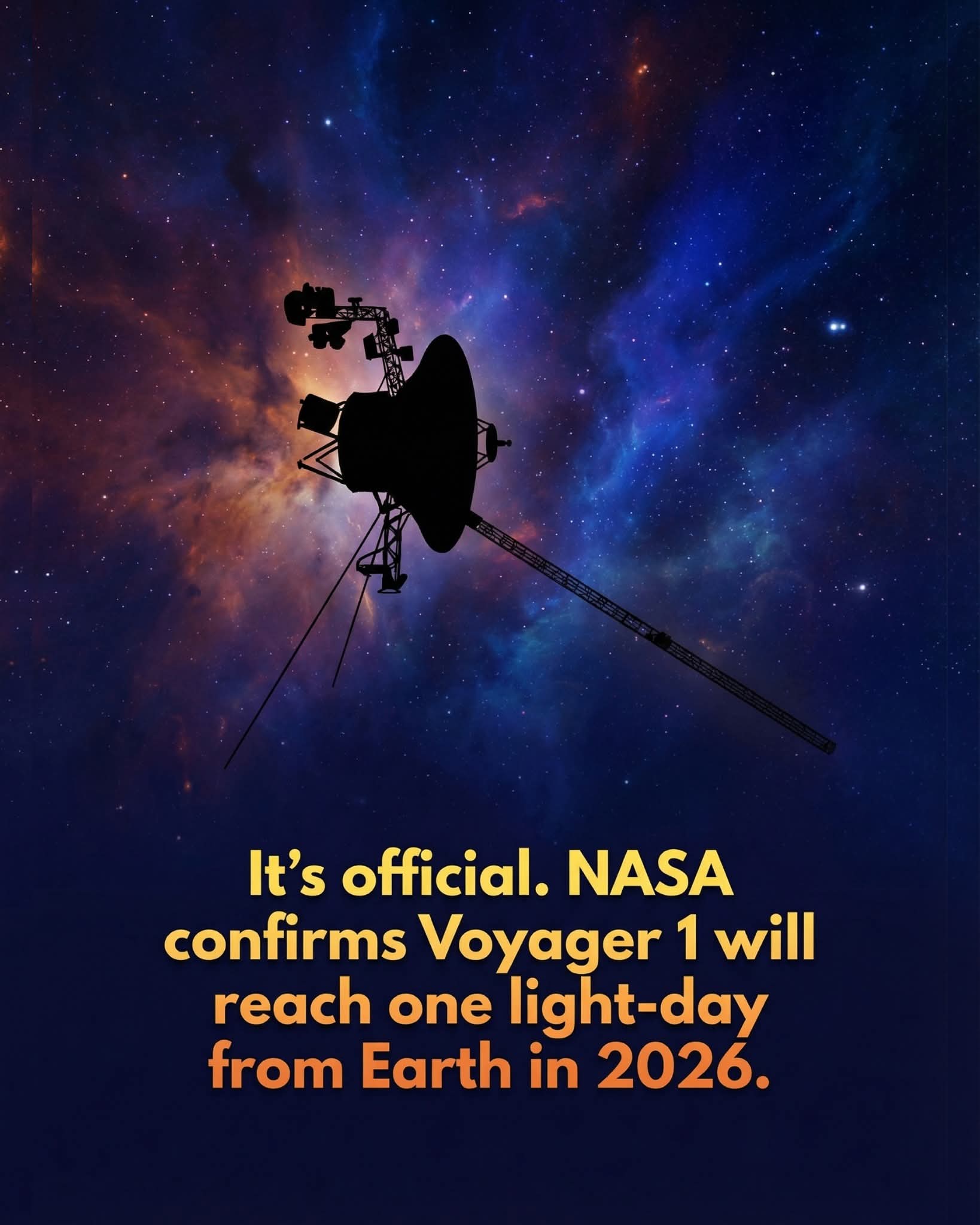
In November 2026, NASA’s Voyager 1 will cross the “one light-day” threshold, making communication with Earth a 48-hour round trip.
Launched in 1977, the Voyager 1 spacecraft continues to redefine the limits of human achievement as it traverses the silent void of interstellar space. By November 2026, the probe will officially be one light-day away from Earth, a distance of approximately 16 billion miles. At this staggering range, radio signals traveling at the speed of light will require a full 24 hours to reach the spacecraft, turning every command and response into a two-day marathon. This symbolic milestone underscores the sheer scale of our solar system and the incredible longevity of a machine designed nearly half a century ago.
Despite its age and the extreme conditions of deep space, Voyager 1 remains a functional scientific outpost beyond the reach of the sun’s influence. It continues to beam back invaluable data about the mysterious environment between stars, carrying with it the “Golden Record”—a time capsule of Earth’s sounds and images for any intelligence it might encounter. As it drifts further into the cosmic dark, the probe serves as a testament to human curiosity, proving that our technological reach now spans distances measured not in miles, but in the time it takes light itself to travel.
source: National Aeronautics and Space Administration. (2024). Voyager 1: The Farthest Human-Made Object. NASA Science Mission Directorate.
About the Author